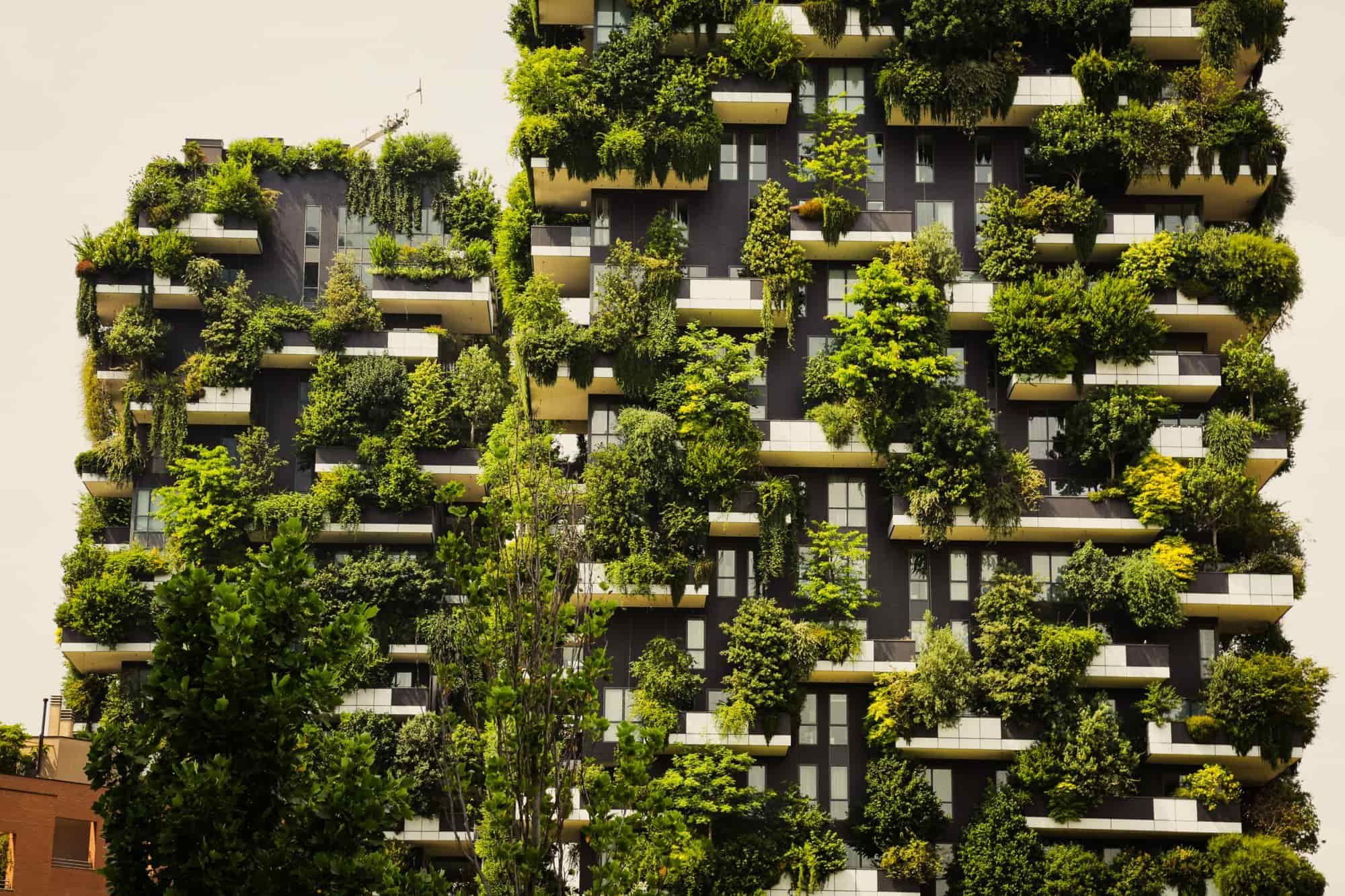
Vietnam is facing intensifying climate pressures, from urban flooding in Ho Chi Minh City to record-breaking summer heat in Hanoi. Architecture, as the discipline that shapes the built environment, cannot afford to stand apart from this transformation.
The Context: Vietnam and the Climate Challenge
According to World Bank reports, Vietnam is among the countries most vulnerable to climate change in Southeast Asia. Rising sea levels directly threaten coastal cities like Ho Chi Minh City and Can Tho. Average temperatures are climbing each decade. Extreme rainfall events are becoming more frequent and more severe.
In this context, the construction industry, responsible for roughly 39% of global CO₂ emissions, carries a particularly significant responsibility. At Z.FSO, we believe that sustainable architecture is not a trend or a checkbox to tick at the end of a project. It is the foundation of responsible design practice.
Passive Design: Learning from Tradition
One of the most effective approaches Z.FSO is implementing is passive design, maximising the natural conditions of a site to reduce the load on mechanical systems. The aim is for air conditioning to be a last resort, not a default.
Traditional Vietnamese architecture already understood this intuitively: wide roof overhangs to manage rain and sun, central courtyards that draw cross-ventilation through the home, locally fired brick that absorbs heat and regulates humidity. We are not trying to replicate those forms, but to understand the climatological logic embedded in them, and reinterpret that logic in a contemporary architectural language.
"Sustainability is not an add-on feature. It is the way we think about architecture from the very first question of a project."
— Huyen Ng, Founder
Local Materials and Shorter Supply Chains
A significant portion of a building's carbon footprint comes from the transportation of materials, what the industry calls embodied carbon. Using locally sourced materials not only reduces transport emissions but supports regional economies and ensures the building is climatically and culturally appropriate to its place.
At Z.FSO, we prioritise materials with clear provenance within a reasonable radius: Vietnamese terrazzo, local brick, bamboo, and timber with certified sustainable harvesting. Not because they are "traditional", but because they are correct, technically, environmentally, and aesthetically.
Urban Greening: Planting as a Technical Solution
In urban projects, Z.FSO approaches greenery not merely as an aesthetic element but as a genuine technical strategy: green roofs reduce surface temperatures, living walls provide biological insulation, and correctly oriented shade trees can reduce air conditioning loads by up to 30%.
This is not a trend. It is a rational response to a measurable reality: Vietnam's cities are warming faster than surrounding rural areas due to the Urban Heat Island effect. Architecture can and must be part of the solution.
The Practical Challenge: Cost and Awareness
We do not shy away from the reality: genuinely sustainable design requires greater upfront investment in thinking. Building orientation analysis, energy modelling, selecting materials with long lifecycles, all of this takes time and expertise.
But when considered over the full life of a building, 30, 50 years, lower operating costs, greater structural longevity, and stronger long-term property value make a compelling case. This is the argument we regularly make to clients, and increasingly, they understand and agree.
Z.FSO's Direction
With every project, we ask: how will this building respond to its local climate over the next 20 years? That question shapes every design decision, from facade orientation and window-to-wall ratios to loggia depth and the selection of every finish material.
The future of architecture in Vietnam depends on the whole industry, architects, developers, contractors, and end users, raising the standard together. Z.FSO is committed to contributing to that process, one better building at a time.
Written by Huyen Ng · Z.FSO Architecture Studio